

Gallbladder Attacks: Symptoms, Triggers, and When to See a Surgeon
✎ Key Takeaways
-
A gallbladder attack happens when a gallstone blocks a bile duct. This causes sudden, severe pain in the upper right abdomen — often described as knife-like or grabbing — that typically starts within an hour of eating. -
Key symptoms to watch for include upper right abdominal pain, nausea, vomiting, fever, chills, and pain that radiates to the back or right shoulder blade. Yellowing of the skin or eyes is a serious warning sign. -
Fatty and fried foods are the most common triggers. Large meals, rapid weight loss, prolonged fasting, and pregnancy can also bring on an attack. -
Most attacks last one to five hours. If pain lasts more than five hours, or comes with fever, chills, or yellowing skin, go to the emergency room immediately. -
Even if the pain goes away on its own, don’t ignore it. Gallstones rarely resolve without treatment, and another attack is very likely without medical care. -
Treatment ranges from medication to surgery. Laparoscopic gallbladder removal is the most common solution — it’s minimally invasive and most patients recover within a week. -
You can lower your risk with lifestyle changes. Eating regular meals, choosing a low-fat diet rich in fruits and vegetables, and losing weight gradually can all help prevent gallstones from forming or worsening.
Gallbladder disease is more common than most people realize, and it’s becoming more common in younger adults. If you’ve ever experienced a sudden, intense pain in your upper right abdomen after a meal, you may have had a gallbladder attack without knowing it.
The gallbladder is a small organ located under the liver that stores bile, which is a digestive fluid produced by the liver. When you eat, the gallbladder releases bile into the small intestine through the bile ducts to help digest fats. The gallbladder becomes more active when you consume processed or fatty foods.
One of the most common diseases of the gallbladder is gallstones (known medically as cholelithiasis). While these are often asymptomatic, sometimes they will cause a gallbladder attack, which can be a medical emergency. If you are a frequent gallstone attack sufferer, you may need to undergo a gallbladder removal or cholecystectomy.
In this article, we’ll combine medical expertise with authentic patient experiences to provide a well-rounded view of how to recognize and respond to a gallbladder attack.
What Is a Gallbladder Attack?
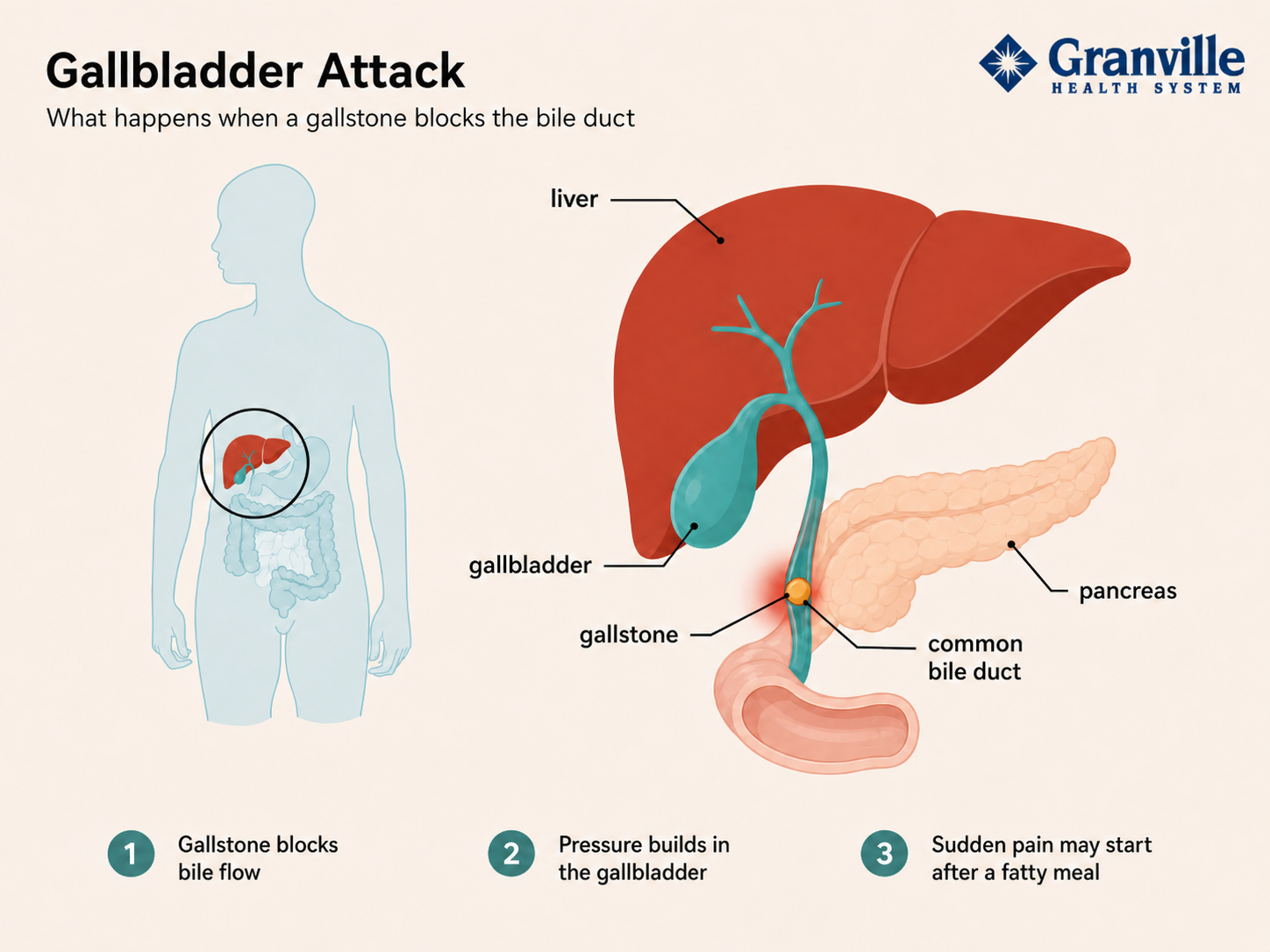
A gallbladder attack (also called a gallstone attack, biliary colic, or acute cholecystitis) occurs when a gallstone blocks one of the bile ducts connected to your gallbladder. The gallbladder is a small organ tucked beneath your liver that stores bile, a digestive fluid your liver produces to break down fats. When you eat, the gallbladder squeezes bile through the bile ducts and into the small intestine.
When a gallstone lodges in a duct, bile backs up and pressure builds rapidly, which causes sudden, severe pain.
The blockage is almost always caused by a gallstone (cholelithiasis), though gallbladder inflammation without gallstones is a less common cause.
10 Symptoms of a Gallbladder Attack
Gallbladder attacks tend to come on suddenly and can escalate quickly. The most common symptoms include:
- Sudden, severe pain in the upper right abdomen, often described as “knife-like,” “grabbing,” or a “lightning strike” in the stomach
- Pain in the center of the abdomen, just below the breastbone
- Pain that radiates to the right shoulder blade or back
- Nausea and vomiting
- Fever and chills, which is a sign the gallbladder may be inflamed or infected
- Jaundice, which is yellowing of the skin or eyes, caused by bilirubin backing up into the bloodstream
- Pain that does not improve when you change positions. Unlike muscle pain, gallbladder pain tends to stay constant regardless of how you move
- Bloating or a feeling of fullness in the upper abdomen
- Shortness of breath in some cases, due to the severity of the pain
- Dark urine or pale stools, which are signs that bile flow is obstructed
Pain intensity can range from a 4/10 to a 10/10, with some patients describing it as comparable to childbirth or a heart attack.
Gallbladder Attack Symptoms in Women
Women are more likely to develop gallstones than men, particularly during pregnancy, after pregnancy, or while taking hormonal birth control or hormone therapy. Women may also experience atypical symptoms — including pain that feels more like heartburn, general upper abdominal discomfort, or referred pain to the right shoulder — which can make diagnosis less straightforward.
If you’re pregnant and experiencing upper abdominal pain, nausea, or fever, contact your healthcare provider promptly, as gallbladder issues during pregnancy require careful management.
What Does a Gallbladder Attack Feel Like?
Most people describe the onset as sudden and unmistakable. The pain usually begins within an hour of eating, especially after a fatty or heavy meal, and tends to peak within 15 to 60 minutes.
Common descriptions include:
- A sharp, cramping pain in the right side, just under the ribs
- Burning or pressure that radiates into the back or right shoulder
- Pain that doesn’t let up when you shift positions, lie down, or press on the area
- A “full” or tight sensation across the upper abdomen
How Long Does a Gallbladder Attack Last?
Most gallbladder attacks last between one and five hours, though some resolve in as little as 30 minutes. If the pain extends beyond five hours or is accompanied by fever, chills, or jaundice, that is a medical emergency — seek care immediately.
Can Gallbladder Attacks Come and Go?
Yes. If a gallstone temporarily blocks a duct and then shifts, the pain may subside on its own. However, this does not mean the problem is resolved. Gallstones rarely pass on their own, and a future attack is very likely without treatment. Even if your symptoms resolve completely, schedule an appointment with your gastroenterologist as soon as possible.
What Triggers a Gallbladder Attack?
Foods That Cause Gallbladder Attacks
Diet is the most common trigger. The gallbladder works hardest when it needs to release bile to digest fat. High-fat meals increase gallbladder activity and the risk of a stone getting lodged. Common food triggers include:
- Fried foods (french fries, fried chicken)
- Fatty meats and processed meats
- Full-fat dairy (butter, cheese, ice cream, whole milk)
- Rich sauces and gravies
- Fast food meals
- Highly processed snack foods
Eating large meals can also trigger attacks, as the gallbladder contracts more forcefully to release a larger volume of bile.
Other Triggers
- Rapid weight loss: Crash dieting or bariatric surgery can cause cholesterol to crystallize into stones.
- Pregnancy: Hormonal changes slow bile flow and increase stone formation risk.
- Prolonged fasting: This can include skipping meals or fasting diets.
- Stress : Some evidence suggests stress affects gallbladder motility.
Can Stress Cause Gallbladder Attacks?
Stress alone doesn’t cause gallstones, but it may affect how the gallbladder contracts and could contribute to triggering symptoms in people who already have stones. If you’re noticing attacks during periods of high stress, dietary triggers during that time are likely also a factor.
Risk Factors and Underlying Causes of Gallbladder Problems
The rise in gallbladder disease, and the fact that it’s trending younger, indicates that lifestyle and/or environmental factors may be at play. In particular, rising obesity levels seem to be exacerbating the issue due to increasing LDL (“bad”) cholesterol in the bloodstream and making the bile more saturated. Losing weight extremely rapidly can also make gallstones more likely to form due to a disruption in the usual balance of cholesterol and bile acids.
Here’s a quick list of medical and lifestyle risk factors for gallstones:
- Having a family history of gallstones
- Being obese
- Eating a high-fat and/or low-fiber diet
- Losing weight extremely quickly
- Taking certain medications, such as birth control or hormone therapy
- Having diabetes
- Being pregnant
- Being female
Many patients report upper right quadrant pain after overindulgence in heavy, greasy foods. If you’re experiencing this, it may be time to switch to a Mediterranean diet that’s rich in fruits, vegetables, healthy fats, and whole grains. (And also, see your doctor.)
What to Do During a Gallbladder Attack
If an attack starts, stop eating and drinking to avoid putting more demand on the gallbladder. A heating pad on the upper right abdomen can help ease muscle spasm, and some people find mild relief by lying on their left side or sitting slightly forward. Over-the-counter ibuprofen can help with both pain and inflammation; acetaminophen can help with pain alone. None of these measures treat the underlying problem, but they can make the episode more manageable while it passes.
When to Go to the Emergency Room
Seek emergency care if the pain has lasted more than five hours without improvement, if you develop a fever above 101°F or severe chills, or if your skin or the whites of your eyes begin to yellow. Rapid heart rate, very low blood pressure, or vomiting you can’t control are also reasons to go immediately. An untreated gallbladder infection or blocked duct can become life-threatening quickly — if you’re unsure whether your symptoms warrant a trip to the ER, err on the side of going.
Diagnosis and Medical Treatments for Recurring Gallstone Attacks
The diagnostic process for gallstone attacks typically begins with a review of the patient’s medical history and symptoms. Blood tests (including liver function tests) can help identify signs of infection, inflammation, or liver issues. Imaging tests like an ultrasound, a CT scan, or a HIDA scan may be used if the diagnosis is uncertain or if complications are suspected.
Your doctor will likely prescribe pain relievers, anti-nausea drugs, and agents like ursodeoxycholic acid (Ursodiol) to help dissolve gallstones. You may undergo endoscopic retrograde cholangiopancreatography (ERCP), a procedure in which tools are inserted through a flexible tube and used to identify and either remove or break up the stones inside bile ducts.
Because gallstones are likely to recur (even if successfully dissolved), doctors frequently recommend surgical options like laparoscopic cholecystectomy. Laparoscopic gallbladder removal is much less invasive than traditional gallbladder surgery, and most patients recover within a week. Open surgery may still be necessary if there’s significant scarring or other complications present.
Failure to diagnose and treat gallstones in a timely manner can result in life-threatening complications such as acute cholecystitis or pancreatitis. The inflammation of your gallbladder can even trigger the development of gallbladder cancer, although this is rare.
Preventive Measures and Long-Term Management
If you’re concerned about gallstones (perhaps due to mild yet noticeable pain after high-fat meals) but they haven’t yet led to a severe gallbladder attack, there are some lifestyle modifications you can make to help things stay under control. Regular meals and healthy dietary choices are key, and if you’re trying to lose weight, do so gradually. Be sure to monitor the early signs and discuss any post-meal abdominal pain with your gastroenterologist.
If you’ve had your gallbladder removed, your body will no longer be able to store bile once it’s produced. Instead, bile will be released into the duodenum at a constant rate. This means that you may need to cut out fatty foods from your diet and eat smaller, more frequent meals for several months. You can gradually reintroduce foods as your body adjusts.
Don’t Ignore Gallbladder Attack Symptoms
If you’re having recurring upper-right-quadrant abdominal pain after meals, this is a reason to see your gastroenterologist as soon as you can. Prompt medical attention, including perhaps seeing a surgeon, can prevent this common health complaint from turning into something more serious.
Your doctor can give you more details on lifestyle adjustments and possible medical treatments that can offer relief. By monitoring your symptoms and combining expert advice with accounts of real patient experiences, you can set yourself up for better health going forward.


