
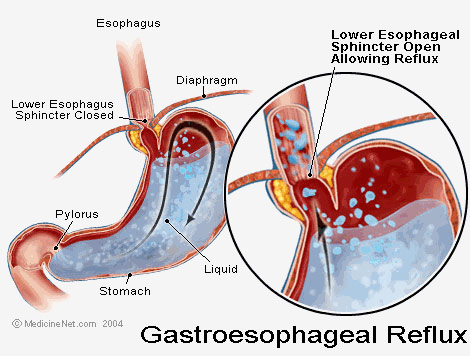
In normal patients, this muscle is fairly tight around the bottom of the esophagus. In patients with GERD, this muscle is weak and allows the stomach juices to backup into the esophagus. Because there is no protective lining in the esophagus, this causes an irritation and can lead to many problems, such as pain, bleeding, scarring and even cancer.
GERD is often associated with an opening of the muscle between your chest and abdominal cavities (diaphragm). This is known as a hiatal hernia.
The most common symptom of GERD is pain. It is usually felt in the upper abdomen or beneath the breast bone. Occasionally the pain can be severe enough that the patient feels as if they are having a heart attack. If your pain is this severe, contact your doctor immediately or go to the nearest emergency room to make sure that you are not having a heart attack. Nausea and vomiting are also common symptoms. Symptoms frequently occur after eating and at night.
There are many tests that your doctor may perform to assist in the diagnosis of GERD. Some blood testing, X-rays and possibly an upper GI endoscopy (EGD) may be needed.
Things that you can do to prevent symptoms include:
- Watch your weight.
- Limit caffeine, peppermint, fatty foods and alcohol.
- Quit smoking.
- Do not eat at least 2 – 3 hours before bedtime.
- Raise the head of your bed 4 – 6 inches or sleep with multiple pillows.
If you have symptoms, your doctor may have some medications that may help you. There is also a surgical procedure that can be performed to correct this problem. This surgery is not for everyone. Talk with your doctor in regards to your symptoms.
The content on this site is intended for informational purposes only and is not intended as medical advice.
Click here to schedule an appointment with a primary care provider that can help.


